
A gas burner isn’t just about connecting a gas cylinder and turning on the fuel. You need plenty of air, too, if you want LPG to burn cleanly. If your kitchen’s stuffy, heat and fumes hang around, and the flame can act up. For LPG gas in Singapore, good ventilation in your kitchen isn’t just a nice-to-have. It’s essential for safe cooking.
Why Ventilation Matters for LPG Burners
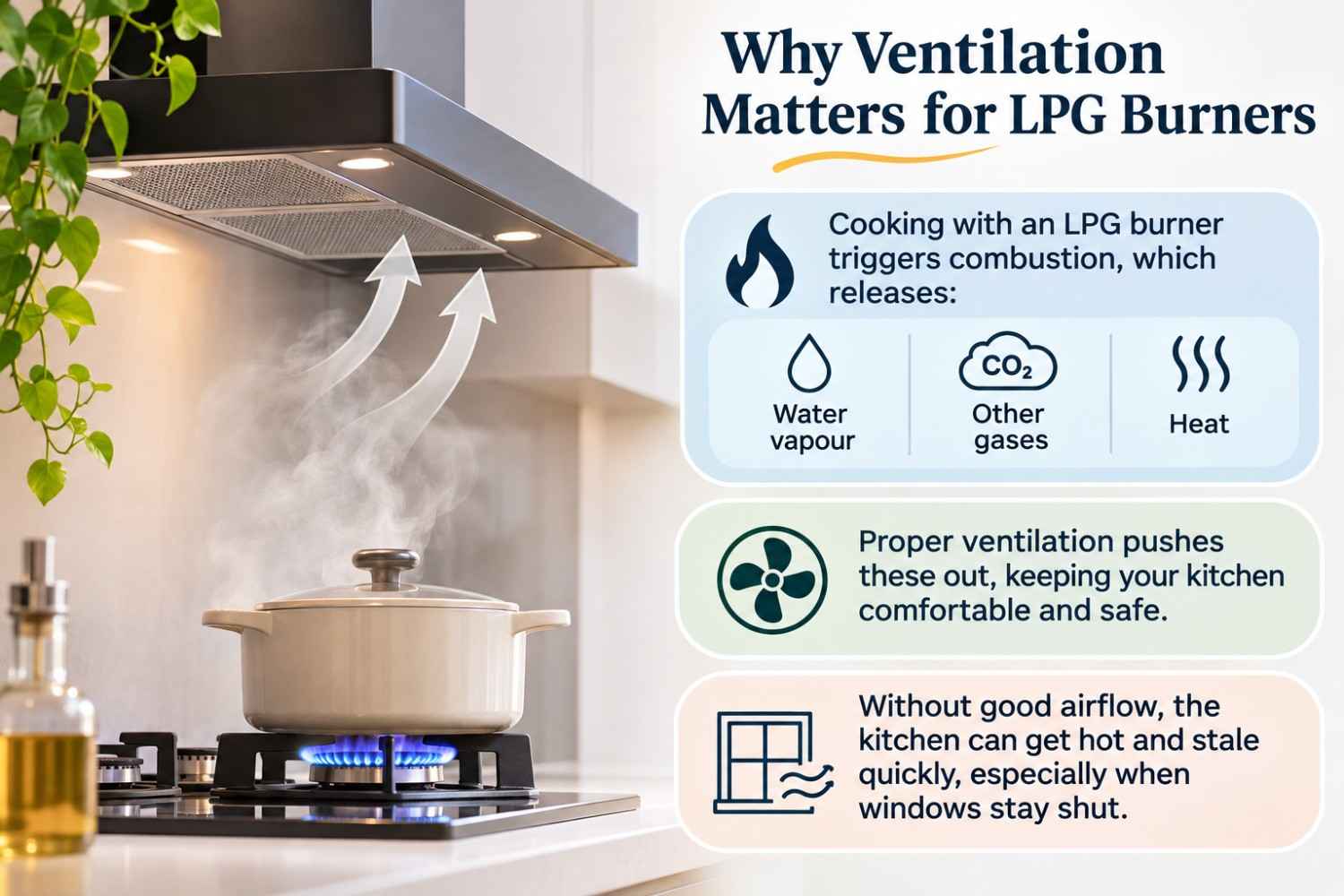
Whenever you fire up your gas stove, you’re triggering combustion. The burner mixes LPG with air, heats your food, and also lets off water vapour and other gases. Proper ventilation pushes all that stuff out, keeping your cooking space comfortable and safe.
If your kitchen doesn’t get much airflow, it gets hot and stale fast, especially in spaces where windows stay shut.
Fresh Air Fuels Combustion
A gas flame lives off oxygen, so without enough fresh air, the LPG might not burn all the way. When that happens, you risk getting carbon monoxide in the mix, an invisible, odourless gas that’s dangerous to breathe.
You can read a lot from the flame itself. A steady blue flame means things are working right. If you start seeing yellow flames or soot, something’s up. Maybe the burner’s dirty, the air supply’s off, or some part’s damaged. Either way, the flame’s telling you your kitchen needs more fresh air, and maybe a check-up for your stove.
Households using Singapore LPG gas should not dismiss these signs. Cleaning the visible parts may help when food debris is blocking the burner, but persistent flame changes need a technician’s attention.
How Exhaust Systems Remove Heat and Fumes
Cooking creates steam, smoke and grease particles. Add the heat from the burners, and a small kitchen can become uncomfortable within minutes.
An extractor hood draws fumes away from the stove. An exhaust fan helps move stale air outside. Both can improve the cooking environment, provided the kitchen also has a way for fresh air to enter.
This is worth considering in homes using ESSO LPG gas in Singapore. The ventilation arrangement should suit the kitchen layout, the appliance and the amount of cooking taking place.
How Does Poor Ventilation Affect Burner Performance?
Poor ventilation does not always stop a burner from working. The flame may still appear, and the stove may still produce heat. However, restricted airflow can contribute to incomplete combustion and make the kitchen unpleasant to use.
Uneven Flames and Incomplete Combustion
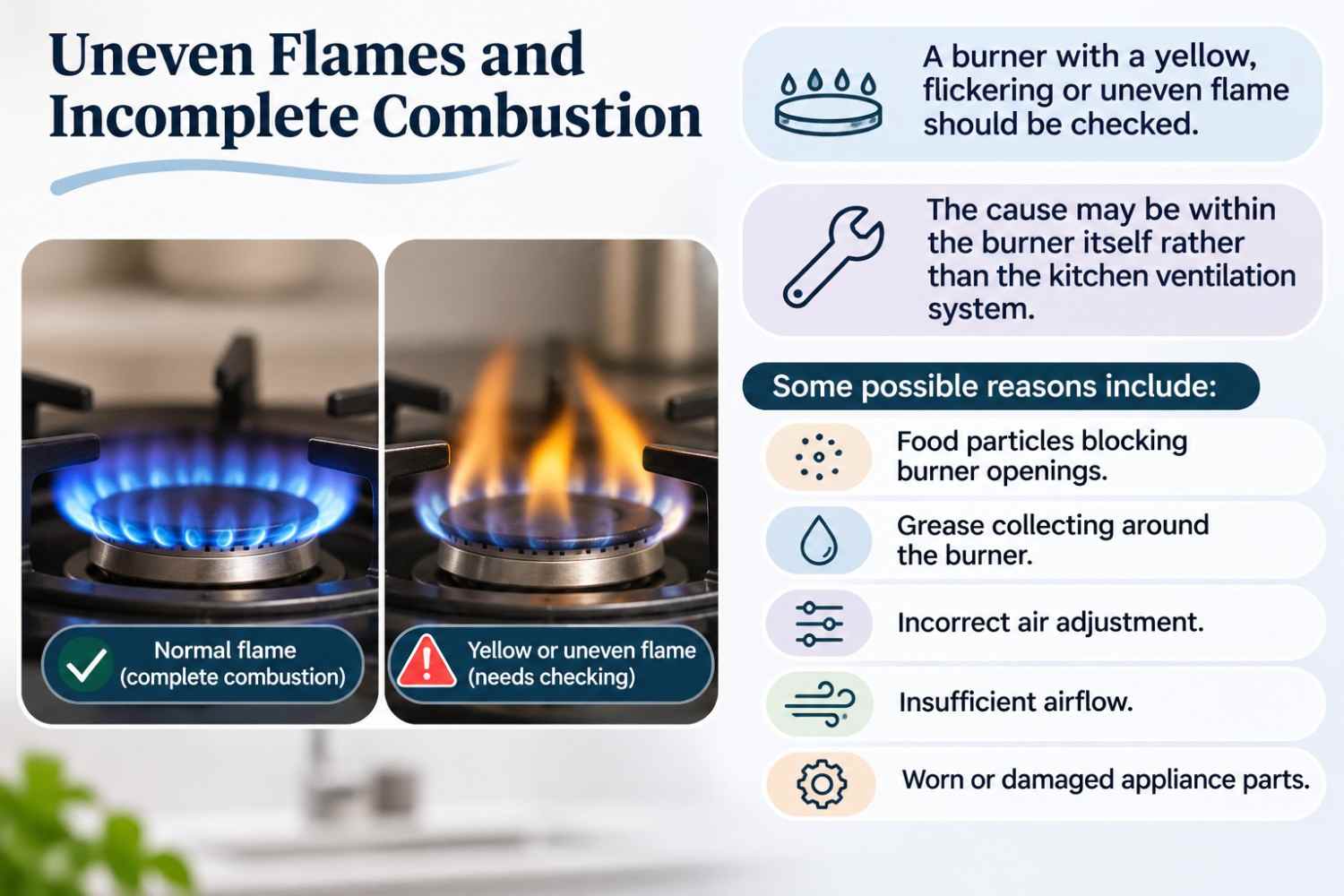
A burner that produces a yellow, flickering or uneven flame should be checked. The cause may be within the burner itself rather than the kitchen ventilation system.
Some possible reasons include:
- Food particles blocking burner openings.
- Grease collecting around the burner.
- Incorrect air adjustment.
- Insufficient airflow.
- Worn or damaged appliance parts.
If you notice incomplete combustion, you might be breathing in carbon monoxide. That’s serious. Don’t try to fix the burner yourself. If the flame looks weird or there’s soot showing up on your pots and pans, get someone to check it out. For questions about your gas supply, call your LPG supplier in Singapore. But if there’s a problem with the burner, always let a certified technician handle it.
Heat Build-up in Enclosed Kitchens
Cooking several dishes at once can raise the temperature of a kitchen quite quickly. Steam adds to the problem, particularly when there is no clear route for warm air to escape.
An extractor hood can remove some of the heat and moisture produced during cooking. Opening a suitable window may help too. The aim is to keep air moving rather than allow heat and fumes to collect around the stove.
A small fan may not be sufficient for a kitchen where multiple burners are used for long periods. Ventilation should be suitable for the room and its cooking requirements.
How to Improve Kitchen Ventilation
No need to tear apart your whole kitchen. First, take a look at your extractor hood, exhaust fan, and any air vents you already have. If something’s clogged, dirty, or just not working right, airflow doesn’t stand a chance.
Grease deserves attention here. It piles up on filters and inside exhaust ducts, and before you know it, your system can’t breathe.
Quick Ventilation Habits for LPG Users
Make these part of your kitchen routine:
- Turn on the extractor every time you cook, especially with more than one burner going.
- Crack open a window or vent when you can.
- Don’t block air passages with furniture or boxes.
- Clean out grease buildup as the manufacturer recommends.
- If your burner has a yellow flame or leaves black marks on your pots, have it checked.
- Notice weak airflow, weird noises, or a sticky layer of grease? Don’t ignore it. Take action before it gets worse.
These steps help maintain ventilation. They will not fix a faulty regulator, damaged hose or defective burner.
Kitchen Ventilation Features and Their Purpose
Each part of a kitchen ventilation setup has a different function. A combination of suitable features helps manage fresh air, heat and cooking fumes.
| Kitchen feature |
Purpose |
| Windows and vents | Bring fresh air into the kitchen |
|
Extractor hood |
Draw cooking fumes away from the stove |
| Exhaust fan |
Push stale air outside |
| Clear air openings | Allow air to move without obstruction |
| Clean filters |
Help the extractor maintain airflow |
Commercial kitchens need regular attention because their cooking equipment may run for much longer than a household stove. Grease can settle inside exhaust ducts and kitchen hoods. Cleaning these areas should be included in routine maintenance. An LPG supplier in Singapore can also guide businesses on gas handling and equipment care.
What Should LPG Users Know About Kitchen Safety?
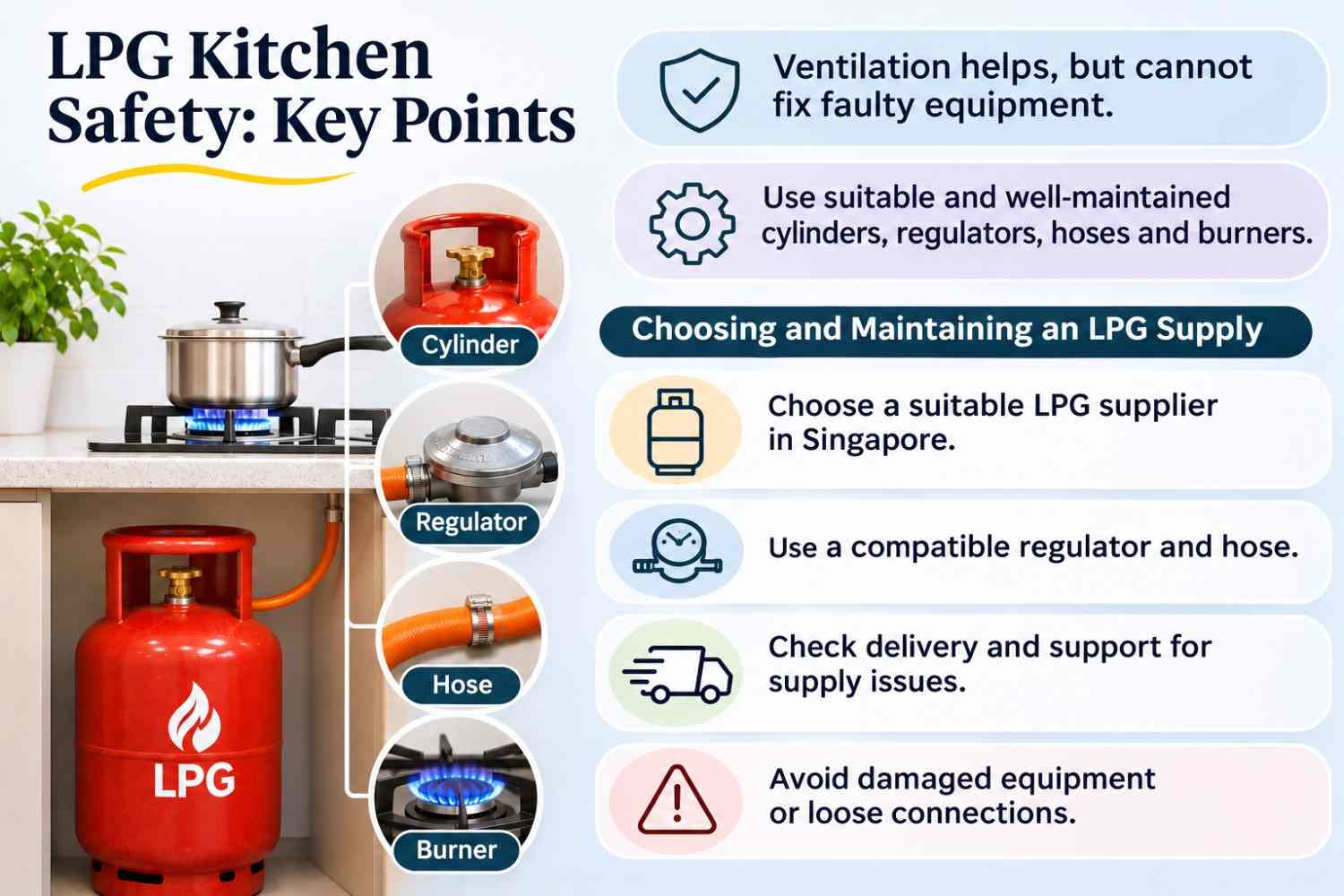
Good ventilation cannot make up for faulty gas equipment. Cylinders, regulators, hoses and burners must all be suitable for the appliance and kept in sound condition.
Choosing and Maintaining an LPG Supply
Before choosing an LPG supplier in Singapore, check whether the cylinders are suitable for your appliance and whether clear handling instructions are provided. The regulator and connecting hose must also be compatible with the stove.
When comparing an LPG gas supplier in Singapore, ask about cylinder delivery, handling and what to do if you notice a problem with the supply. Do not use equipment that appears damaged or has loose connections.
A suspected gas leak needs immediate attention. Avoid switching electrical appliances on or off, and do not light a flame. Turn off the gas supply only if it is safe to do so. Leave the area and contact the appropriate emergency service from a safe location.
For households and businesses using Singapore LPG gas, YLH Gas can assist with LPG supply enquiries. Safe cooking also depends on the condition of the equipment, adequate airflow and regular kitchen maintenance.
