
A blue flame is usually a sign that an LPG burner is getting the right mix of gas and air, while a yellow or orange flame can point to a combustion problem. Flame colour itself does not reduce your gas bill, but it can give you an early clue that a burner needs attention. For kitchens using LPG gas in Singapore, that can matter when trying to avoid unnecessary gas use.
What Does the Flame Colour Tell You?
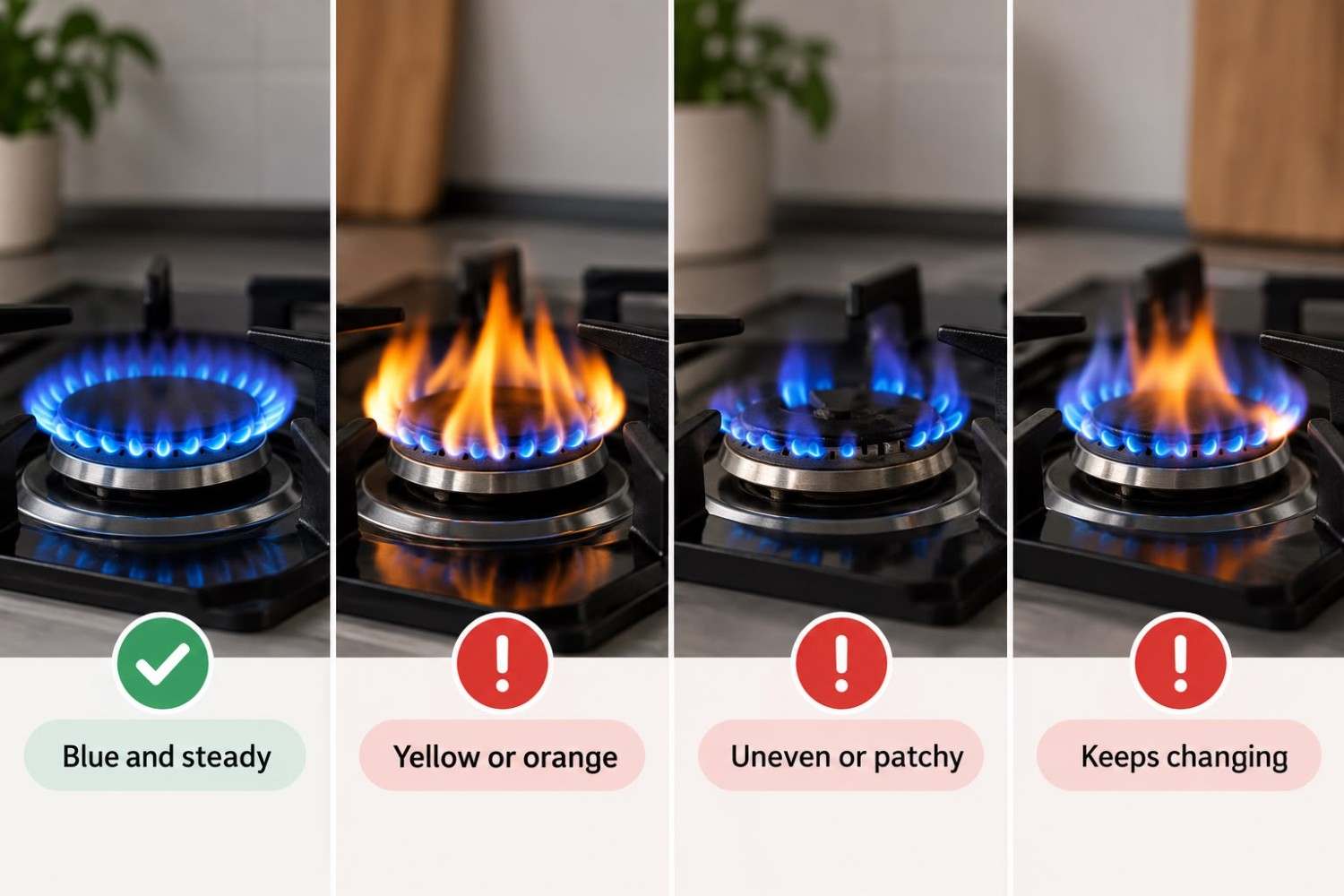
A burner that is working normally will usually produce a steady blue flame. If you start seeing yellow or orange, do not immediately assume that your gas usage has gone up. So a few things could be messing with it. Maybe there’s some gunk or dirt hanging out around the burner, or the little openings are clogged up.
The flame is useful as a quick visual check, but it is not a gas meter. If the colour has changed and stays that way, it is worth finding out why rather than simply turning the burner up.
|
If the flame looks like this |
It could be a sign of |
|
Blue and steady |
The burner is generally working as expected. |
|
Yellow or orange |
The burner may need cleaning or checking. |
| Uneven or patchy |
Something may be blocking part of the burner. |
| Keeps changing |
The burner or gas setup may need attention. |
You do not need to analyse the flame every time you cook. Just pay attention when it suddenly looks different from usual. If a burner that normally has a steady blue flame starts turning yellow, burning unevenly or behaving differently, that is a good reason to have a look at it.
Have the Equipment Checked Instead of Adjusting It Yourself
For kitchens using Singapore LPG gas, these changes are worth paying attention to, particularly when they happen alongside slower cooking or a noticeable change in gas consumption. If the flame looks off, that’s your clue something’s changed. To figure out what’s really going on, you have to check the equipment and how you’re using it. The flame only hints at a problem. The real answer is in the setup and how you’re running things.
Can a Blue Flame Really Save on LPG?
Not by itself. A blue flame does not mean cheaper gas. What matters is whether the burner is working properly and giving you the heat you need.
In a busy kitchen, even a small burner problem can add up. If a burner is dirty or struggling to burn properly, you may end up turning it higher or cooking for longer. Do that day after day, and you can end up using more LPG.
If your gas consumption has suddenly changed without a clear reason, it may be worth speaking to your LPG supplier in Singapore and checking the cooking equipment at the same time. That gives you a better chance of finding the actual cause instead of assuming the flame colour is responsible.
What Else Can Push Up Your LPG Usage?
Flame colour is only one small part of the picture. The way a kitchen operates every day can have a much bigger effect on gas consumption.
A restaurant that suddenly has more orders, runs its burners for longer or starts preparing larger quantities of food will naturally use more LPG. Even simple habits, such as leaving a burner on higher than necessary, can add up over a busy day.
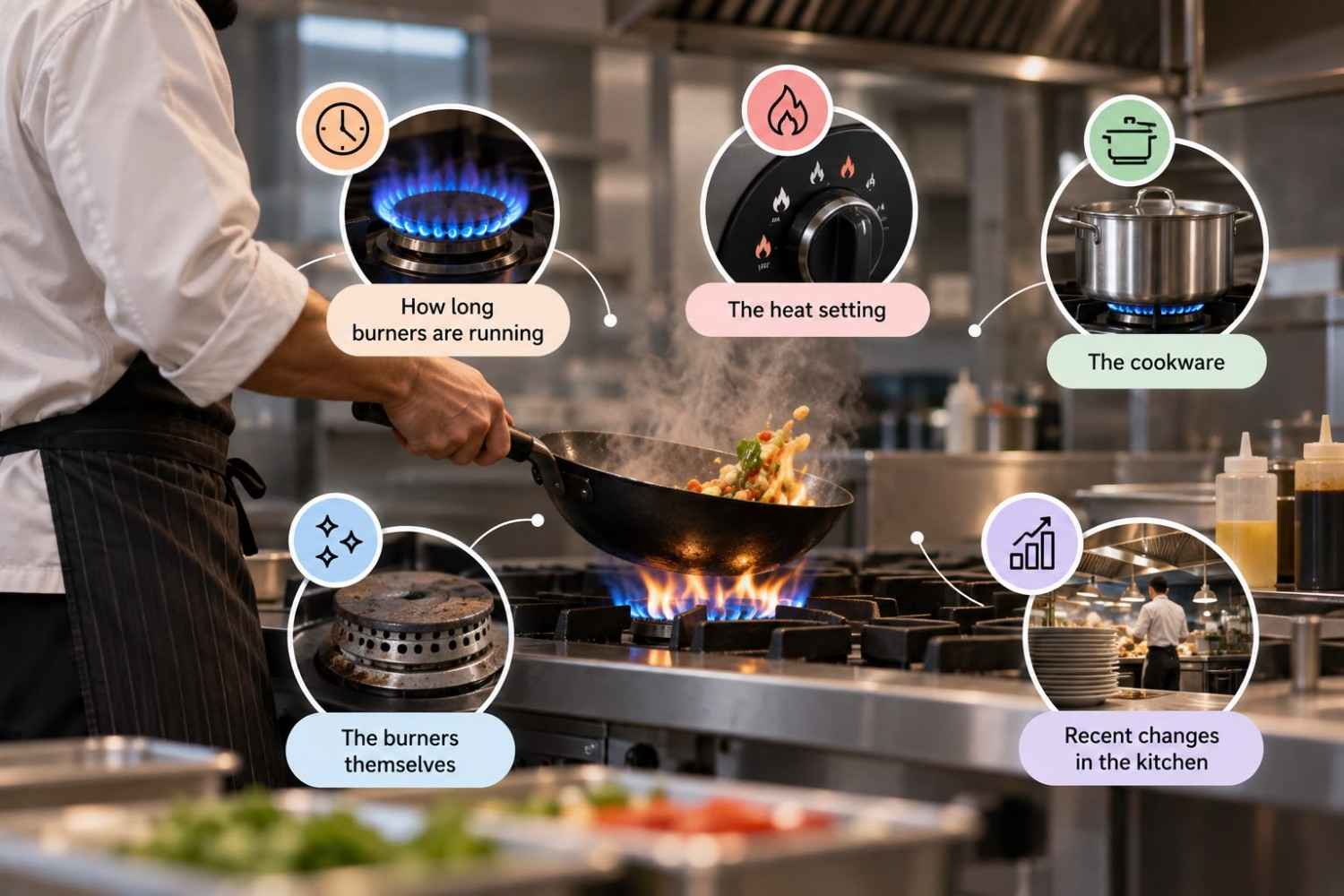
If your gas bill seems higher than usual, have a look at:
- How long the burners are running: Longer cooking hours naturally mean higher usage.
- The heat setting: There is little reason to keep a burner on full power once the required heat has been reached.
- The cookware: A pan that does not match the burner size can make cooking less efficient.
- The burners themselves: Dirt and blocked openings can affect how the flame burns.
- Recent changes in the kitchen: New equipment, a busier service or changes to the menu can all affect consumption.
How Can You Tell If a Burner Needs Attention?
Do not rely only on the colour of the flame. Look at how the burner behaves.
A flame that keeps changing colour, burns unevenly or produces soot around cookware deserves attention. You may also notice that food takes longer to cook than usual or that a burner needs to be turned up more than before.
A sudden increase in gas consumption is another reason to investigate. If several burners are behaving differently from normal, it is better to have the equipment checked rather than trying to adjust the gas supply yourself.
Does Regular Maintenance Help Control LPG Use?
Keeping your cooking equipment clean helps everything run smoothly. Burners, especially in a busy kitchen, pick up grease, crumbs, and other gunk fast. If you don’t clear them out, the flame doesn’t burn right.
Regular cleaning and proper equipment maintenance can therefore be useful. It also makes it easier to spot a problem before a small change becomes an everyday issue.
For businesses using LPG gas in Singapore, keeping an eye on consumption is useful as well. Compare your gas usage over similar periods rather than judging it from one busy week. A sudden or unexplained change is more meaningful than a small difference from one month to another.
What Should You Do If Gas Consumption Suddenly Increases?
Start by checking whether anything has changed in the kitchen. Are you cooking more? Are burners being used for longer? Has new equipment been added? These questions can explain an increase that has nothing to do with a faulty gas supply.
If nothing obvious has changed, have the relevant cooking equipment and gas setup checked by an appropriately qualified professional. Do not try to modify burners, regulators or gas connections yourself.
An LPG gas supplier in Singapore can also be a useful point of contact when you need to discuss your LPG supply or have concerns about unusual usage.
What Is the Best Way to Keep Gas Costs Under Control?
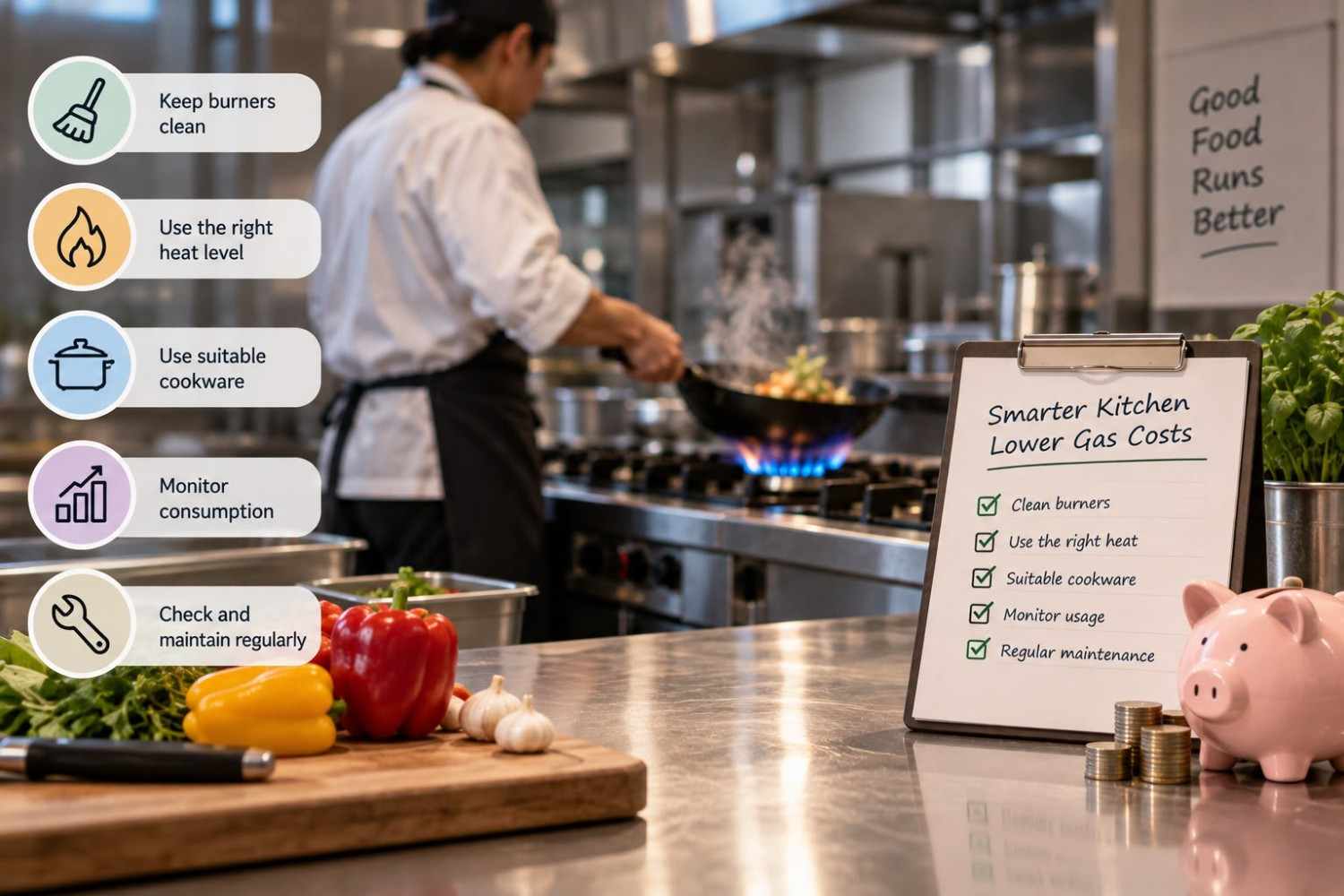
There is no single flame colour trick that will suddenly bring down LPG costs. The more practical approach is to look at how the kitchen uses gas from day to day.
Make sure burners are clean, use the appropriate heat for each cooking task and keep an eye on changes in consumption. If a flame suddenly looks different from normal, treat it as something worth checking rather than simply turning the gas up.
YLH Gas can help businesses understand their LPG supply needs and discuss issues around gas usage, while proper burner maintenance and sensible kitchen practices can help keep everyday consumption under control.
Why Should You Pay Attention to Flame Changes?
In a busy commercial kitchen, small habits add up. Watching the flame, maintaining the equipment and paying attention to changes in gas consumption can give you a much clearer picture of where LPG is being used than flame colour alone. With Singapore LPG gas and cooking equipment working as they should, the focus can stay on using the gas efficiently rather than trying to solve the problem by simply increasing the flame.
